Quick answer
An Adelaide private lender provides short-term business loans secured on South Australian property, registered as a first or second mortgage or protected by a caveat. Mortgages and caveats in SA are lodged electronically, and an owner can seek a caveat's removal with Form RX, which gives the caveator 21 days to obtain a court order. Each loan can be anywhere from $20k to $5m, and there's no formal valuation required.
Key points
- Electronic lodgement is mandated in SA for mortgages, discharges, transfers, caveats and caveat withdrawals
- A Form RX removal application leads to the caveat coming off 21 days after Land Services SA posts its notice, unless a court order is served
- Transfers of qualifying non-residential, non-primary-production land under contracts from 1 July 2018 attract no duty
- Residential land tests changed on 15 September 2026, bringing more vacant land into duty
- Amounts
- $20k – $5m
- Private first mortgages
- Terms from 1 to 24 months
- Valuation
- No formal valuation required
South Australia has a few rules that work quietly in a business owner’s favour. Transfers of most commercial and industrial land attract no stamp duty. The registry went electronic early, starting with discharges of mortgage in 2017. And the process for removing a caveat runs through the registry with a clear 21-day timetable, so everyone knows where they stand.
Those details shape how a private loan secured on Adelaide property is used: what it can fund, how fast it can settle and how the exit is planned. This page walks through them. The lender lends Australia-wide and doesn’t keep an Adelaide office, because nothing in SA’s electronic system needs a local one.
How is the South Australian register run?
Land Services SA handles the day-to-day processing of lodgements, including checking, requisitioning and registering dealings, working with the Office of the Registrar-General. The Registrar-General has mandated electronic lodgement for most dealings, with each mandate applying to documents executed on or after the listed date:
| Dealing | Electronic lodgement mandated from |
|---|---|
| Discharge of Mortgage | 3 April 2017 |
| Mortgage | 12 February 2018 |
| Transfer, Caveat, Withdrawal of Caveat, Lease, Encumbrance | 3 August 2020 |
| Further dealings such as liens, covenants and changes of name | 8 April 2024 |
Two networks operate in SA: PEXA and Sympli. A paper channel remains for self-represented parties, and some dealings, such as those over part of a title, still need paper.
For a private loan, that means the mortgage or caveat lodges the same day documents are signed, and payout, lodgement and funding happen together in one electronic settlement.
How do caveats work on Adelaide property?
When a lender takes a caveat, it records its claim on your title, which blocks other dealings from registering without it. Land Services SA’s fact sheet describes the two ways a caveat comes off.
Withdrawal (Form W1). Once its claim is satisfied, the caveator withdraws the caveat. There’s no 21-day period and no notices. One quirk: a solicitor or registered conveyancer acting for the owner can’t certify the withdrawal, so it must come from the lender’s side. Withdrawals are lodged electronically.
Removal (Form RX). An owner, or someone with an interest in the land, can apply under section 191(1)(e) of the Real Property Act 1886. The removal must be lodged electronically. Land Services SA posts a notice to the caveator, and the caveat is removed 21 days after posting unless an order extending the period, from the Supreme or District Court, is served on the Registrar-General.
A borrower can’t use Form RX to escape a debt, because the loan agreement still binds them. What the timetable does mean is that SA caveat loans are kept short and clean, and if the term must stretch, the caveat can give way to a registered second mortgage. The guide on how to remove a caveat covers the borrower’s side in more depth.
Why does SA’s duty treatment matter for business borrowers?
RevenueSA’s Information Circular 103 says no stamp duty arises on a conveyance of qualifying land under a contract entered into on or after 1 July 2018. Qualifying land is land used for any purpose other than residential or primary production. Land coded as commercial, industrial, institutional, public utility, recreation or mining and quarrying generally qualifies, subject to its actual use.
For an Adelaide business buying its own factory, shop or office, that can remove one of the largest upfront costs. The money that would have gone on duty elsewhere stays in the business, and a private loan, if one is needed, can be sized more tightly. The buy commercial property fast page explains how private funds complete a purchase when the bank can’t keep up.
Residential and primary production land are a different story. Duty still applies, and from 15 September 2026 the Stamp Duties (Residential Purposes and Residential Land) Amendment Act 2026 changed the tests. Vacant land whose zone allows a residence is treated as residential, with an upfront exemption or a refund available in some cases where qualifying development follows. If your exit is selling a vacant block, that change belongs in the numbers.
Land tax is also worth counting. RevenueSA levies it on land you own at midnight on 30 June each year, based on site value, which excludes buildings. Your principal place of residence is commonly exempt.
What SA property makes good security?
Adelaide’s business property is spread across a compact metro area, which makes it straightforward to assess:
- Northern and north-western industrial land. Wingfield, Regency Park, Gillman and Kilburn, plus the Edinburgh precinct further north.
- Southern industry. Lonsdale, home to manufacturers and trade suppliers.
- Inner-city commercial. Offices, consulting rooms and strip shops in suburbs like Norwood, Unley and Prospect.
- Homes and investment property across metropolitan Adelaide, used as security for business purposes.
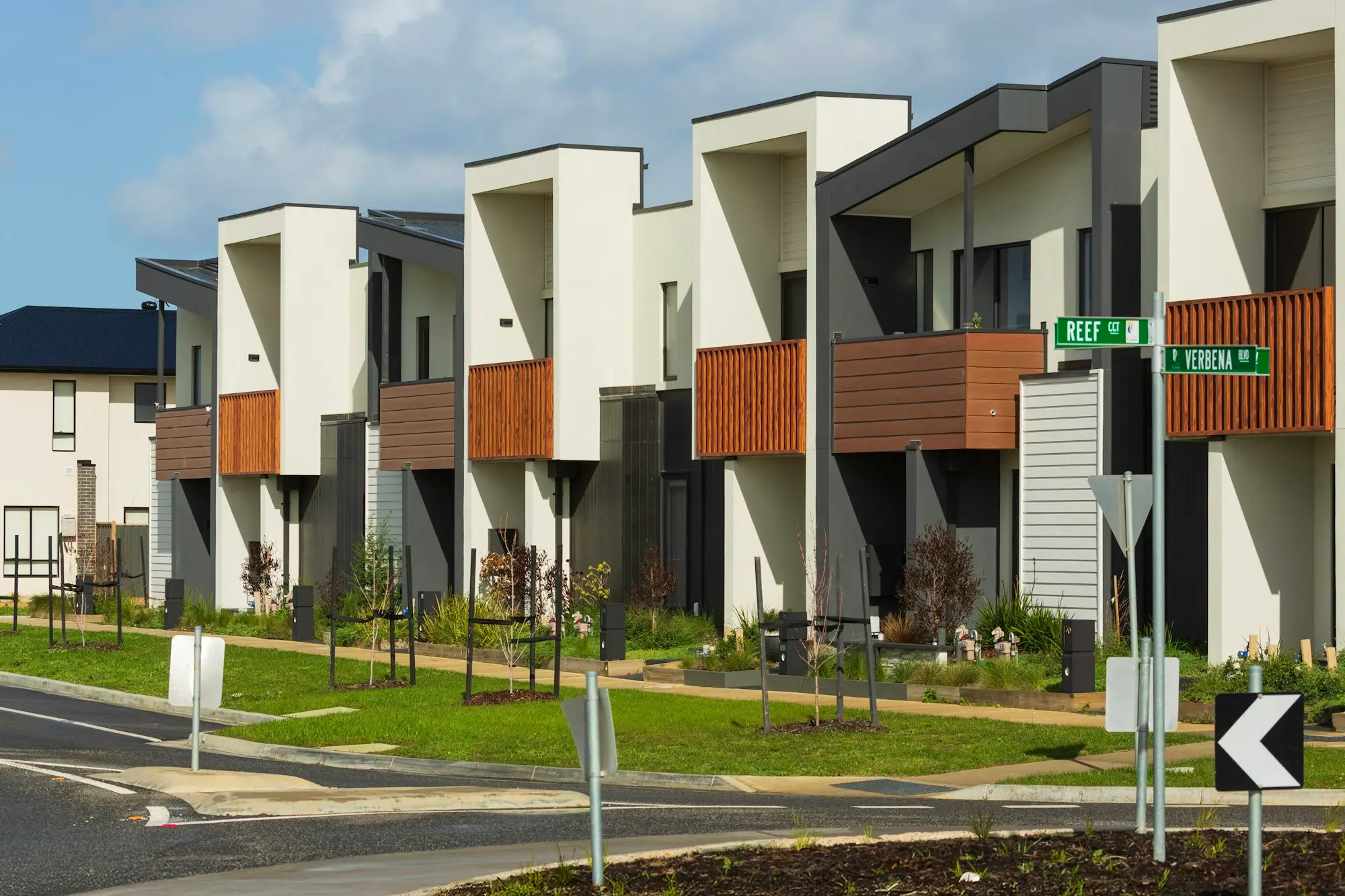
- Completed developer stock, such as new townhouses in the northern and western suburbs.
- Regional property in Mount Gambier, Murray Bridge, Port Augusta, Whyalla, the Barossa and the Riverland; rural and primary production land case by case.
Ready to test a property? A 60-second enquiry is all it takes to get a specialist’s view.
What should Adelaide buyers know about contracts and auctions?
The SA Government’s home-sales guidance sets out the residential rules. The cooling-off period is two clear business days, running from the later of receiving the vendor’s statement (Form 1) or signing the contract. There’s no cooling-off at auction, or for a purchase made after the auction on the same day. A buyer who waives cooling-off before an auction needs a prescribed form signed by an independent legal practitioner.
Those short windows make preparation important. If a business owner buys at auction relying on a bank that later slows down, short-term private money secured on other property can complete the purchase, and the bank’s approval then repays it.
How does an SA private loan settle?
- Enquiry. A few minutes of detail about the property, debts, amount and exit, with no credit check.
- Specialist call. The specialist tests the exit and chooses the structure.
- Letter of Offer. It sets out pricing, the assessment fee and the interest option: prepaid, capitalised or monthly.
- Signing. You sign with your own solicitor or conveyancer.
- Settlement. The mortgage or caveat lodges electronically with Land Services SA and funds are released.
Paying interest upfront or adding it to the balance means you may not make monthly repayments at all while the loan runs.
Two South Australian scenarios
Illustrative example: a developer has six completed townhouses in Adelaide’s north-west, a construction loan falling due and buyers slow to commit. A private first mortgage over the completed stock repays the construction lender and gives the campaign 12 months to run, with interest capitalised and each sale paying down the loan. Our residual stock loans page explains the structure.
Illustrative example: a Lonsdale engineering firm needs $120k to cover wages through a gap between two contracts. The owners have equity in their home in Hallett Cove behind a bank loan. A caveat loan funds the following day, and the first progress payment on the new contract repays it within ten weeks.
Who should look at a private loan in SA?
A good match when:
- there’s solid equity in SA property and a date that can’t move;
- the exit is defined: a sale, a refinance, a contract payment;
- the credit file isn’t perfect, but the security and exit are strong.
A poor match when:
- the purpose is personal or a home purchase;
- the exit is vague or more than 24 months away;
- a bank will lend on normal terms and time isn’t an issue.
How does SA compare with other states?
SA’s duty-free commercial transfers stand out. Victoria has taken a different path with its new commercial property tax (Melbourne). Queensland’s lender caveats lapse automatically after three months (Brisbane), and WA relies on section 138B notices (Perth). The NSW, ACT and Tasmanian rules are on the Sydney, Canberra and Hobart pages, all linked from the locations hub.
Ask what your SA property could fund
fundU lends directly, so a single specialist handles your enquiry from start to finish, and your file isn’t offered around to other lenders. There’s no credit check to find out where you stand.
Accuracy speeds everything up. Give us the correct address, the full amount owing to every lender on the title and your deadline, and the answer you get on the first call will hold. Enquire about an Adelaide loan in about a minute.
Frequently asked questions
Do I need to deal with a lender based in Adelaide?
No. South Australian mortgages and caveats are lodged electronically through PEXA or Sympli, so a lender anywhere in Australia can settle against SA property. You sign with your own conveyancer or solicitor and settlement happens online.
How can a caveat be removed from an SA title?
The lender withdraws it once the loan is repaid, using a Withdrawal of Caveat with no notice period. Separately, an owner can apply for removal with Form RX; Land Services SA posts a notice to the caveator, and the caveat is removed 21 days after posting unless a Supreme or District Court extension order is served on the Registrar-General.
I'm buying a warehouse in Wingfield. Will I pay stamp duty?
Probably not on the transfer itself if the land qualifies. RevenueSA says no duty arises on a conveyance of qualifying land, meaning land used other than for residential purposes or primary production, under a contract entered into on or after 1 July 2018. Your conveyancer will confirm the land use code and treatment.
Does the September 2026 change affect vacant land I'm offering as security?
It may affect how the land is treated if it's sold. From 15 September 2026 the amended tests treat vacant land as residential where its zone allows a residence, so more vacant sites are dutiable on transfer, with exemption and refund options for qualifying development. That matters to a buyer and your exit, and vacant land is assessed case by case as security.
Can a caveat loan settle quickly over my Adelaide home?
Yes. Same-day funding is possible for property-secured amounts between $20k and $250k, while bigger loans up to $5m can be possible within 24–48 hours after the signed documents come back. Your bank mortgage stays where it is and the caveat loan sits behind it.
Is there a cooling-off period when buying property in SA?
For home purchases, SA allows two clear business days, starting from the later of receiving the Form 1 vendor's statement or signing the contract. There's none at auction or for a purchase made after the auction on the same day, and waiving it requires an independent legal practitioner's certificate.
Do you consider property in Mount Gambier, Whyalla or the Riverland?
Yes. The lender lends Australia-wide, and regional SA property is judged by the same standards as metropolitan Adelaide. Rural land and primary production property are looked at case by case.
My completed townhouses in Adelaide's north aren't selling. Can I borrow against them?
Completed residual stock is common security for developers. A loan against the finished dwellings can repay a construction lender or release cash while the sales campaign runs, with the sales as the exit.
Will my existing bank need to approve a second mortgage?
Most bank mortgages require the first mortgagee's consent before a second mortgage is registered. Your solicitor checks the mortgage terms, and a caveat loan is sometimes used while consent is sought.
Is a credit check run when I enquire about an SA loan?
No. Enquiring doesn't involve a credit check. A specialist reviews your answers about the property, what's owing and how you'll repay, then explains the realistic options.
What will the loan cost?
Pricing is set on each deal's security, LVR, term and exit, and the aim is the sharpest price your situation allows. Your Letter of Offer also lists the small assessment fee, which varies with each loan.
Sources
- Land Services SA — Electronic Conveyancing (mandated dealings)
- Land Services SA — Fact sheet: Removal and withdrawal of caveats
- RevenueSA — Information Circular 103: qualifying land (updated October 2026)
- RevenueSA — Real property (land) stamp duty
- RevenueSA — Land tax (published August 2026)
- SA.GOV.AU — Offers, auctions and buying off the plan (updated March 2026)