Quick answer
A construction loan funds the build itself, releasing money in progress draws as each stage is completed and checked, and is secured on the development site. Property-secured developer funding is a short-term lump sum secured on completed property the developer already owns, used for deposits, approvals, holding costs and residual stock. Most projects need a construction lender for the build; property-secured funding covers the stages a construction lender won't.
Key points
- Construction loans pay for the build in staged draws; we don't fund progress draws
- Property-secured funding is a lump sum against completed property
- It fills gaps: site deposits, DA costs, holding costs, residual stock
- Most projects use both, at different stages
- If you need money to build the building, you need a construction lender
- Amounts
- $20k – $5m
- Security
- Existing completed property
- Term
- 1 to 24 months (first mortgage)
- Assessment
- No formal valuation required
“Development finance” gets used for two very different things. One is the loan that pays for the build: slab, frame, lock-up, fit-out. The other is funding a developer raises against property they already own, to cover everything the build loan won’t touch. Developers who confuse the two either chase the wrong lender or end up short at the worst moment. Here’s how they differ, and how they work together.
What is the difference between a construction loan and property-secured developer funding?
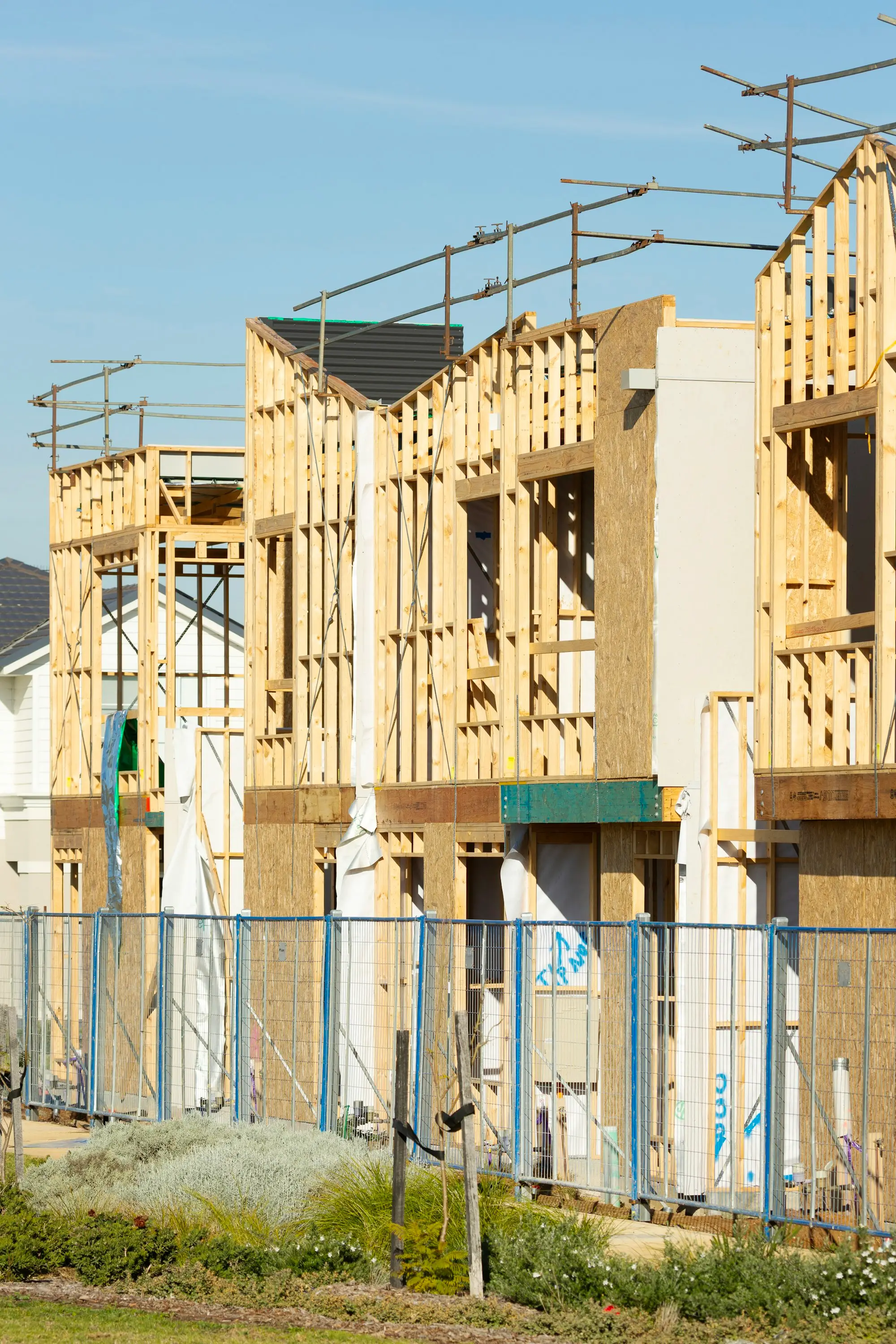
A construction loan finances the building work on a development site. The lender takes security over the site and releases money in stages, called progress draws, as the builder completes each stage and the work is checked. The loan is usually repaid from sales of the finished product or a refinance once construction is complete.
Property-secured developer funding is a short-term private loan secured against completed property the developer already holds: an investment property, a home, a commercial building, or finished stock from a previous project. It’s advanced as a lump sum and used for whatever the project needs outside the build contract.
We arrange the second kind only. Our lending partner fundU lends against existing completed property and does not fund construction progress draws.
How do they compare side by side?
| Question | Construction loan | Property-secured developer funding |
|---|---|---|
| What it pays for | The building work itself | Deposits, approvals, consultants, holding costs, shortfalls, residual stock |
| Security | The development site and the project | Completed property the developer already owns |
| How money is released | Staged progress draws as work is completed and checked | One lump sum at settlement |
| What the lender needs | Approvals, a building contract, a costed budget, often presales | The property, what’s owing on it, the purpose and a clear exit |
| Typical timing | Weeks to arrange, then runs for the build | Funding possible within 24–48 hours once documents are in |
| Term | The construction period, often with a sell-down period | 1 to 24 months on a first mortgage |
| Repayments | Varies by lender | Interest can be prepaid or capitalised |
| Exit | Sales of the finished product or a completion refinance | A sale, a refinance or the construction loan itself |
| Checks along the way | Cost reviews and stage inspections before each draw | Property assessed directly; no formal valuation required |
How does a construction loan work?
A construction lender is funding something that doesn’t exist yet, so it controls the money tightly:
- Approvals first. Development consent, building approval and a final design.
- A building contract and budget. The lender wants to know the full cost to complete, usually with an independent cost review, and that the developer’s own contribution is in.
- Staged release. Money goes out against completed stages, after the work is checked, and often straight to the builder.
- Builder compliance. In New South Wales, SIRA says building businesses must hold home building compensation cover for home building projects over $20,000 including GST, and builders developing their own land for sale must buy it too. The cover must be in place before work starts or any payment is taken.
The staging mirrors how builders are paid. NSW’s guide to home building contracts allows progress payments either as fixed amounts after specified stages are completed, or as work is performed and costs incurred, backed by invoices. It also says a builder can’t ask for a deposit above a tenth of the contract price. On the commercial side, NSW’s security of payment laws give contractors a right to progress payments and set maximum time frames for paying them.
Where does property-secured funding fit?
It covers the gaps around the build, which are often where projects stall:
- Securing the site. A deposit to exchange on an off-market site before the bank can move. See site deposit funding.
- Getting to approval. DA fees, architects, engineers, surveyors and reports, which construction lenders rarely fund. See pre-construction costs.
- Holding the land. Interest, council charges and land tax while approvals progress. See land bank loans.
- Plugging a shortfall. A cost overrun or a gap in the developer’s contribution, secured on other property rather than the site.
- After completion. Repaying an expiring construction loan while unsold stock finds buyers. See residual stock loans.
The pillar page on developer finance secured on property explains how these loans are assessed.
When do you need a construction lender instead?
Be clear-eyed about this:
- You need money to build the building. Funding a 12-month build through staged payments is exactly what construction lenders do, and a short-term lump sum is the wrong tool.
- The project is large compared with your other property. If your completed holdings can’t carry the cost, the site and the project have to be the security.
- The build will outlast a short term. Property-secured funding runs from 1 to 24 months, and a delayed build can push past that.
When does property-secured funding suit better?
- The need arises before the construction lender will commit, such as a deposit or DA costs.
- Speed decides the deal, for example an off-market site with a short option.
- The construction lender won’t stretch further, and you hold completed property with equity.
- The build is finished and the construction lender wants out before every unit has sold.
- Smaller projects or renovations where the developer prefers a single lump sum secured on other property and pays the builder from it.
How do the two work together on one project?
Illustrative example: a Perth developer finds an off-market site for six townhouses with a contract requiring a $180k deposit within a week. The developer owns two completed townhouses from a previous project with no debt. Illustrative: a $450k private first mortgage over the two townhouses funds the deposit, settlement costs and the DA, consultants and holding costs over the next ten months, with interest capitalised. Once approval is granted and a building contract is signed, a construction lender funds the build in progress draws secured on the new site. The developer sells one of the two existing townhouses during the build and repays the private loan in full.
The private loan never touched the building work. It carried the project to the point where a construction lender could take over, which is the job it’s designed for.
What risks come with each, and how do you manage them?
Neither type of finance is risk-free, and the risks sit in different places.
Construction loan risks:
- Cost overruns. If the build costs more than budgeted, the lender usually expects the developer to fund the gap before the next draw is released.
- Builder trouble. A builder who stalls or fails mid-project can freeze draws until a replacement is found and the costs are re-checked.
- Slow sales. If the finished product sells slowly, the construction facility can expire before the debt is cleared.
Property-secured funding risks:
- A short term against a long project. 1 to 24 months can be tight if approvals drag. Build a buffer into the term from the start.
- The exit leans on the project. If repayment depends on the construction lender stepping in, a delay there becomes your problem. A second exit, such as selling one of the properties offered as security, makes the plan sturdier.
- More of your own property is on the line. The security is completed property you already own, so be sure the plan still works if the project slips.
Our guide to exit strategy red flags lists the warning signs lenders look for, and builders juggling several jobs should also read builder funding against property.
What should you have ready for each?
For a construction lender: approvals, plans, the building contract, a costed budget, evidence of your contribution, the builder’s credentials and insurance, and often presales.
For property-secured funding: details of the completed property you’re offering and what’s owing on it, the project’s purpose and timeline, and a clear exit. The development site due diligence guide is worth working through before you exchange on any site. If a deadline is already in view, you can request developer funding against your property today.
Need funding before or after the build? See if you qualify
Tell us about the completed property you can offer, what’s owing on it, what the project needs and how the loan will be repaid. A specialist reviews every enquiry personally and will tell you straight if your need is really a construction loan.
There’s no credit check when you enquire, and your details aren’t sent to a crowd of lenders. The more precisely you describe the property and its debts, the faster you’ll get a reliable answer.
Start your 60-second enquiry and see what your existing property can fund.
Frequently asked questions
Can I use property-secured developer funding to pay my builder's progress claims?
Not as a substitute for a construction loan. This kind of funding is a lump sum secured on completed property, not a facility that releases money stage by stage against the build. It can cover costs around the build, such as a deposit or a shortfall, but the construction itself is a job for a construction lender.
Why won't my construction lender fund the DA and consultants?
Construction lenders usually want an approved project, a signed building contract and a costed budget before they commit. Before approval there is no certain project to lend against. That's why developers often fund pre-construction costs by borrowing against property they already own.
Can I put a second mortgage behind my construction lender on the site?
Construction lenders commonly restrict further security over the site while they are funding the build. It is usually simpler and safer to secure extra funding on a different, completed property such as an investment property, a home or finished stock from an earlier project.
My construction loan expires before all the units sell. What then?
A residual stock loan secured on the completed, unsold units can repay the construction lender and give you time to sell at a fair price. It is repaid as each unit settles.
Do I need home building compensation cover for a spec build in NSW?
SIRA says building businesses must hold HBC cover for home building projects valued over $20,000 including GST, and that builders developing their own land for sale (spec builds) must also buy it. Cover must be in place before work starts or any payment is taken.
How quickly can property-secured developer funding settle?
Funding is possible within 24–48 hours for up to $5m once documents are in, and $20k–$250k is possible the same day. That speed is often what secures an off-market site or covers a sudden shortfall during a project.
Is property-secured funding more expensive than a construction loan?
They are priced differently and do different jobs. Short-term private funding is priced on its security, LVR, term and exit, and interest can be capitalised. Compare the total dollar cost for the weeks or months you actually need the money, rather than treating it as an alternative to a long construction facility.